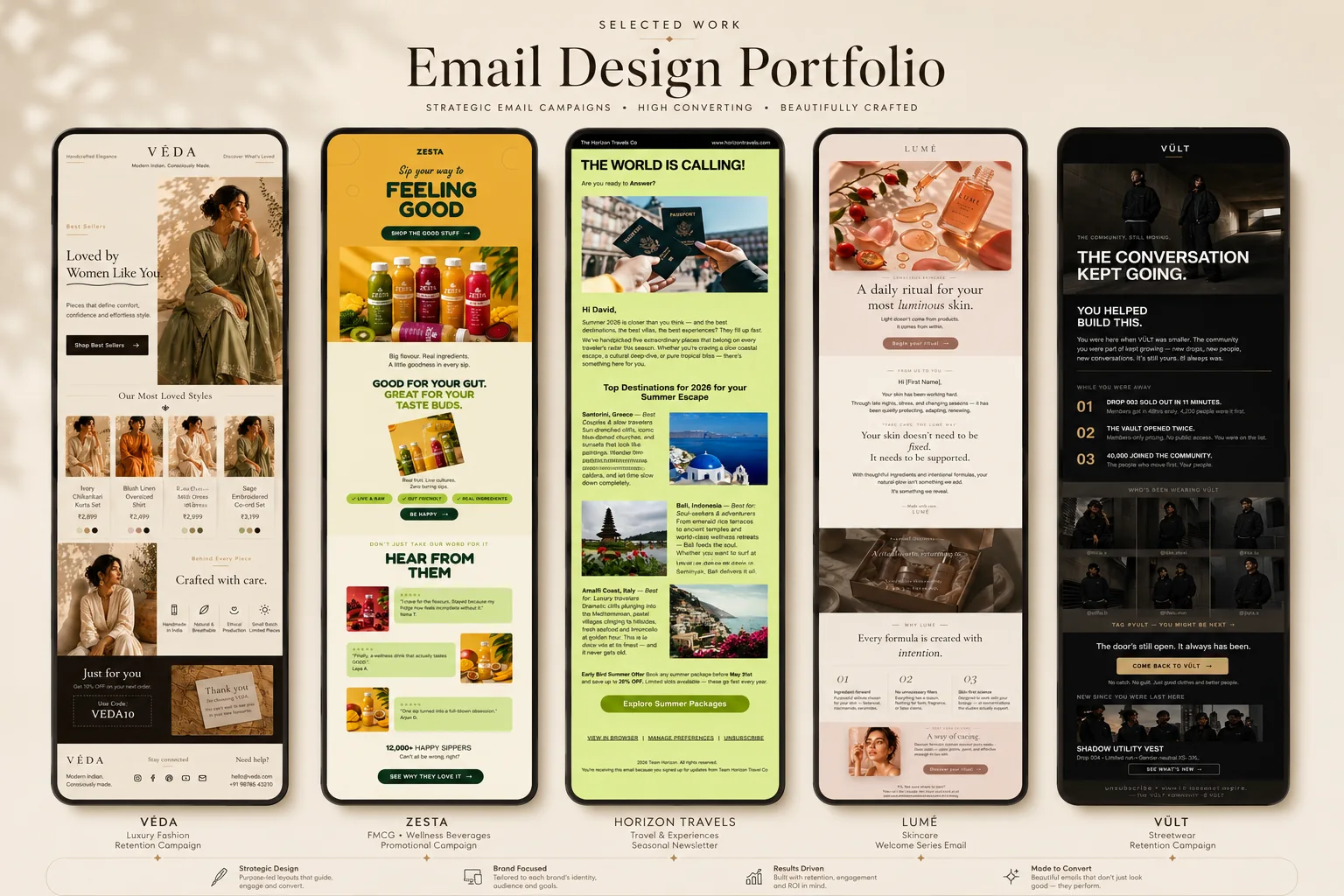
Four brands. Two disciplines.
One system behind both.
Each is a self-directed brand build — concept identity, full retention architecture, and commercial video, developed end to end so the strategy could be shown rather than described.
LUMÉ
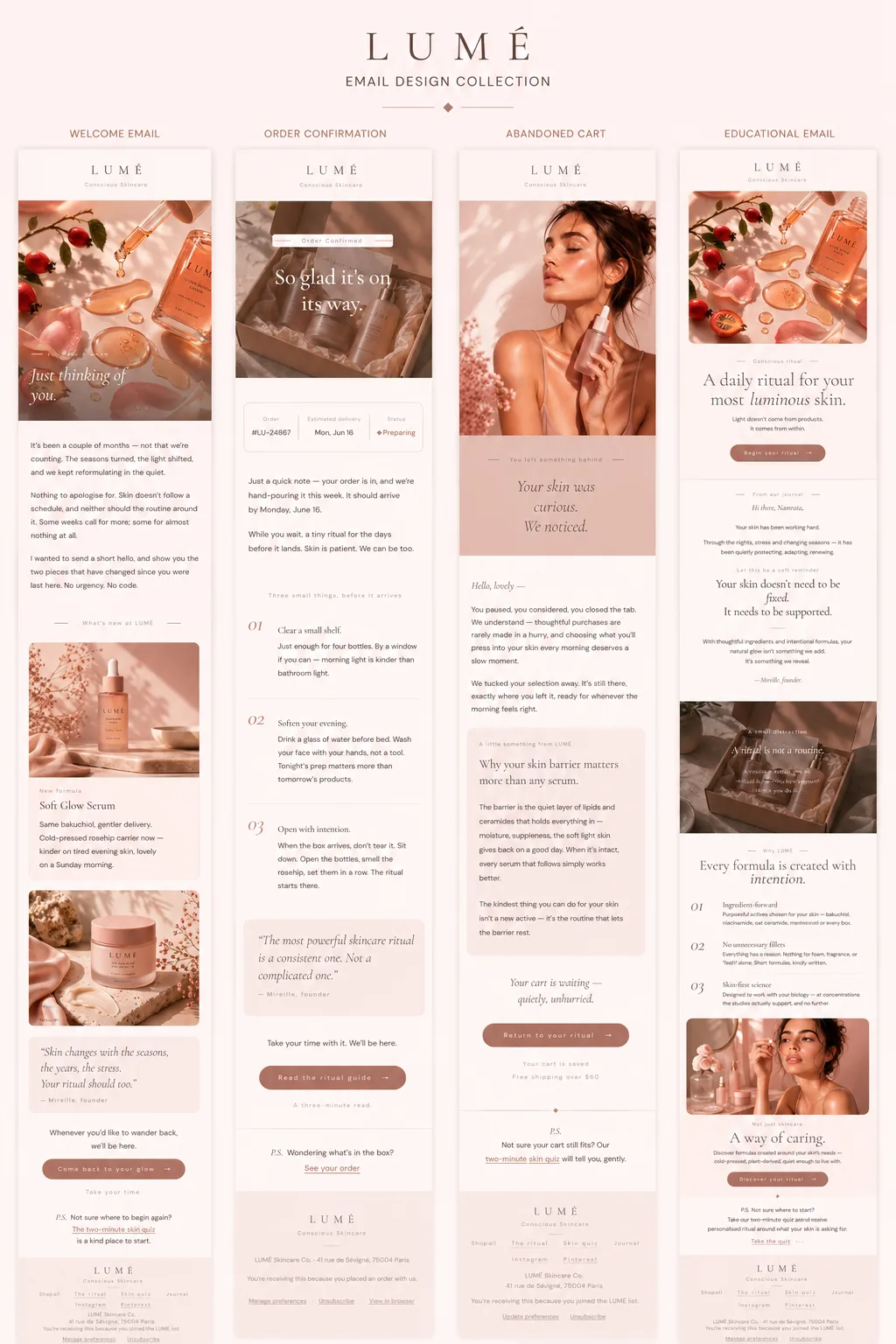
Skincare · FranceConscious skincare built around ritual rather than results-chasing. The full engagement: diagnostic audit, RFM segmentation, four lifecycle flows, on-brand email design, and a brand film built to carry the price point.
- The problem
- Premium skincare has a repurchase problem, not an acquisition problem. A serum lasts eight weeks; the customer forgets by week ten. Broadcast email doesn't catch that — only a timed post-purchase and winback sequence does.
- The approach
- Score every contact nightly on recency, frequency, monetary value, then route them to the flow that fits their stage. Exclusion logic on every send, so best customers and dormant contacts never receive the same email.
- The outcome
- 11% → 26% projected email share of revenue over 90 days, modelled from complete flow coverage and protected deliverability. A projection, not a measured client result.

- Why this register
- The film sells desirability before it sells a product — slow macro, controlled light, a model whose skin is the proof. Premium skincare can't lead with a discount or a claim; the price has to feel justified by the time anyone reads it. Every frame is doing that one job.

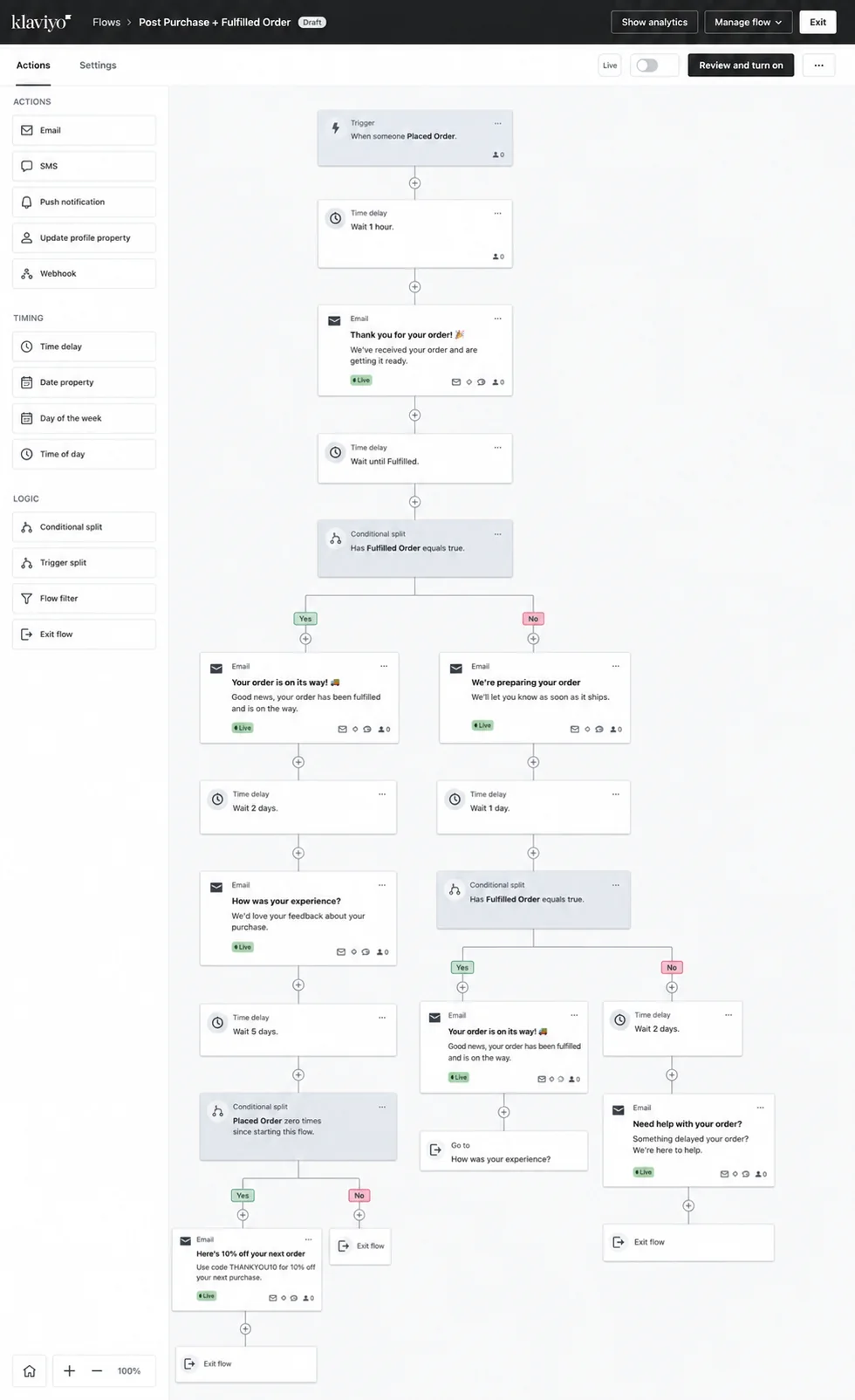

Lifecycle Email System
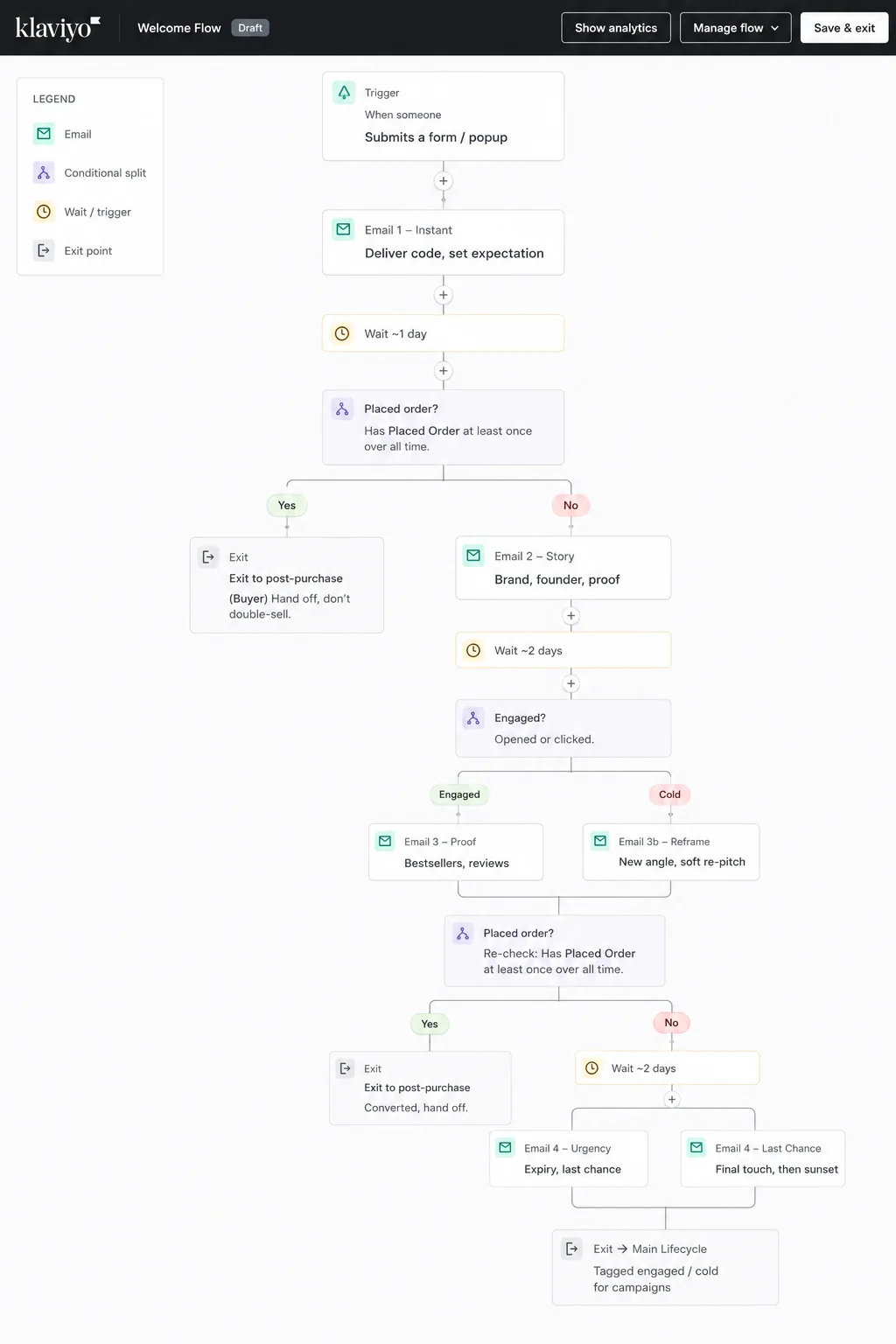
Strategy, copywriting, design and Klaviyo automation for a conscious skincare brand — four journeys, fifteen automated emails, built end to end.
Open case study →The Retention System
The diagnostic behind the build: seven-zone audit, RFM segmentation logic, flow architecture and the measurement layer left running afterwards.
Open audit →VÜLT
Streetwear · Members-onlyStreetwear built on scarcity and belonging. The retention problem here is the inverse of skincare — the customer already wants in. Email's job is to make membership feel like standing, not a mailing list.
- The problem
- Drop-based brands run on urgency, and urgency burns out. Send enough countdowns and the audience stops believing the clock. The list needs a reason to stay warm between drops.
- The approach
- Editorial over promotional. Community recaps, culture edits, and members-only vault access replace discount pressure — so the drop email lands on an audience already paying attention.
- The video
- Try-on in motion, not on a hanger. Streetwear is bought on silhouette and drape, which a flat product photo can't show. The ad answers the only question that matters at checkout: how does this actually sit on a body.
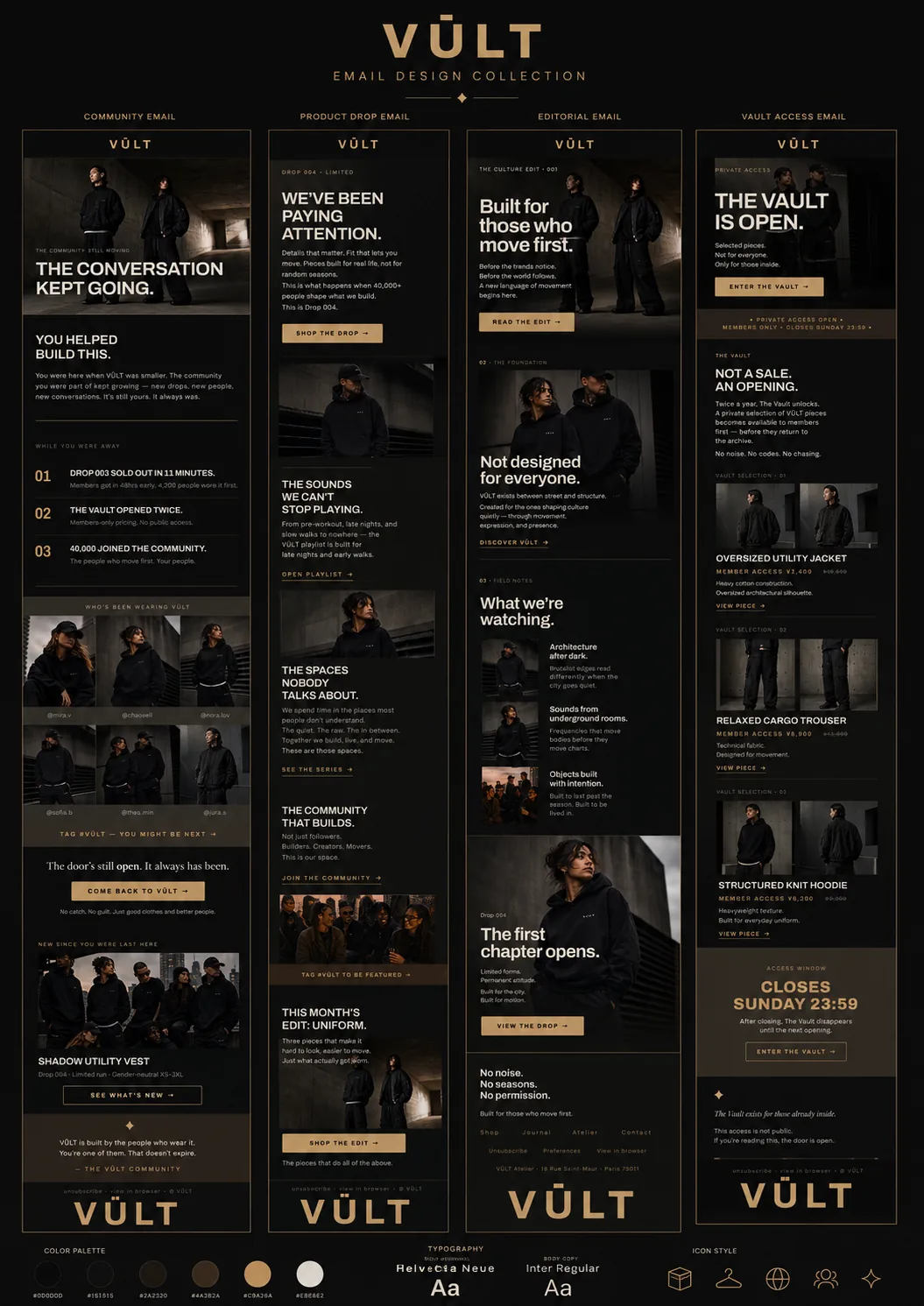

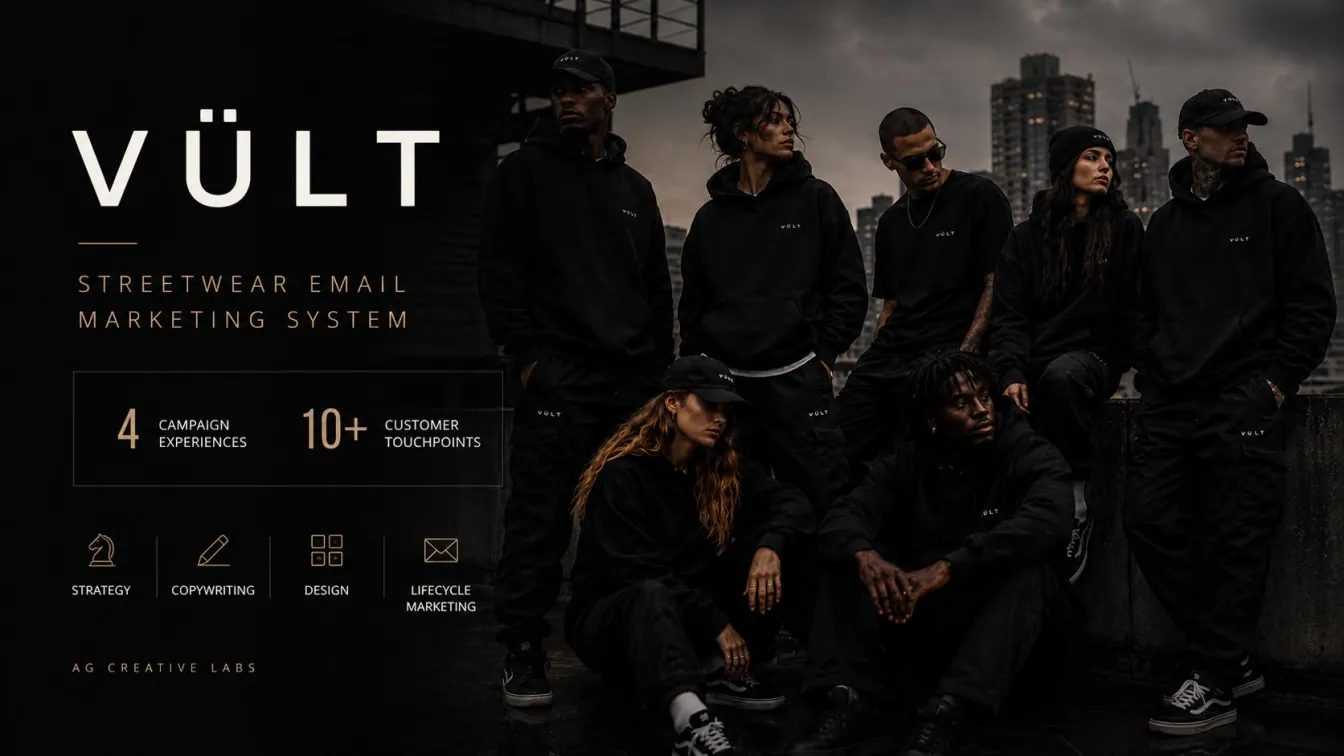
Streetwear Email Marketing System
Four campaign experiences across ten-plus touchpoints — welcome, drop, retention and newsletter, each built to turn buyers into a community rather than a list.
Open case study →BRŪK
Specialty coffee · SubscriptionSmall-batch coffee sold as a morning ritual. Coffee is the clearest replenishment category in DTC — which makes the post-purchase and loyalty layer worth more than any acquisition campaign.
- The problem
- A bag of coffee has a known lifespan. Every day past it that a reorder email doesn't arrive is a day the customer buys someone else's — usually off a supermarket shelf.
- The approach
- A replenishment window timed to consumption rather than the calendar, plus a points-based loyalty tier that gives a reason to reorder from the brand instead of whatever's nearest.
- The video
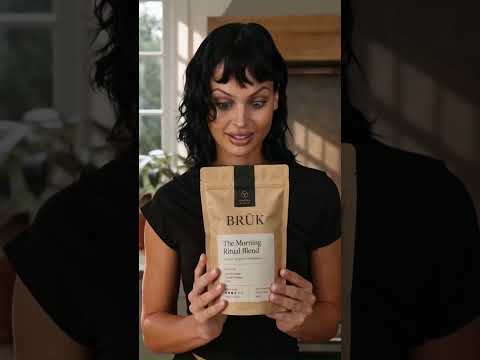
- Unboxing UGC. Specialty coffee's premium is justified by craft signals — the seal, the grind, the bag itself. Unboxing shows those in the order a real customer meets them, and de-risks paying ₹899 for coffee sight-unseen.
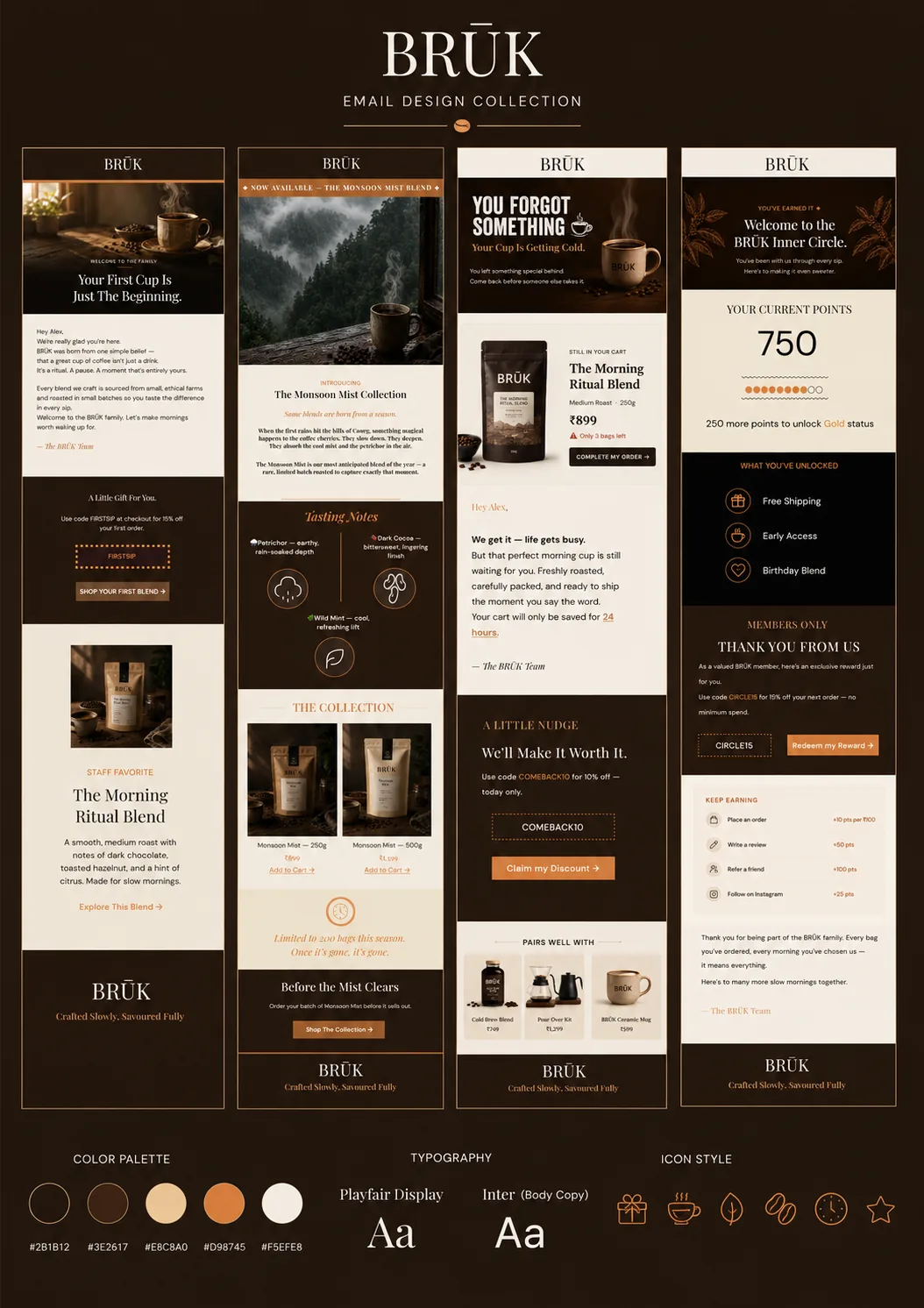
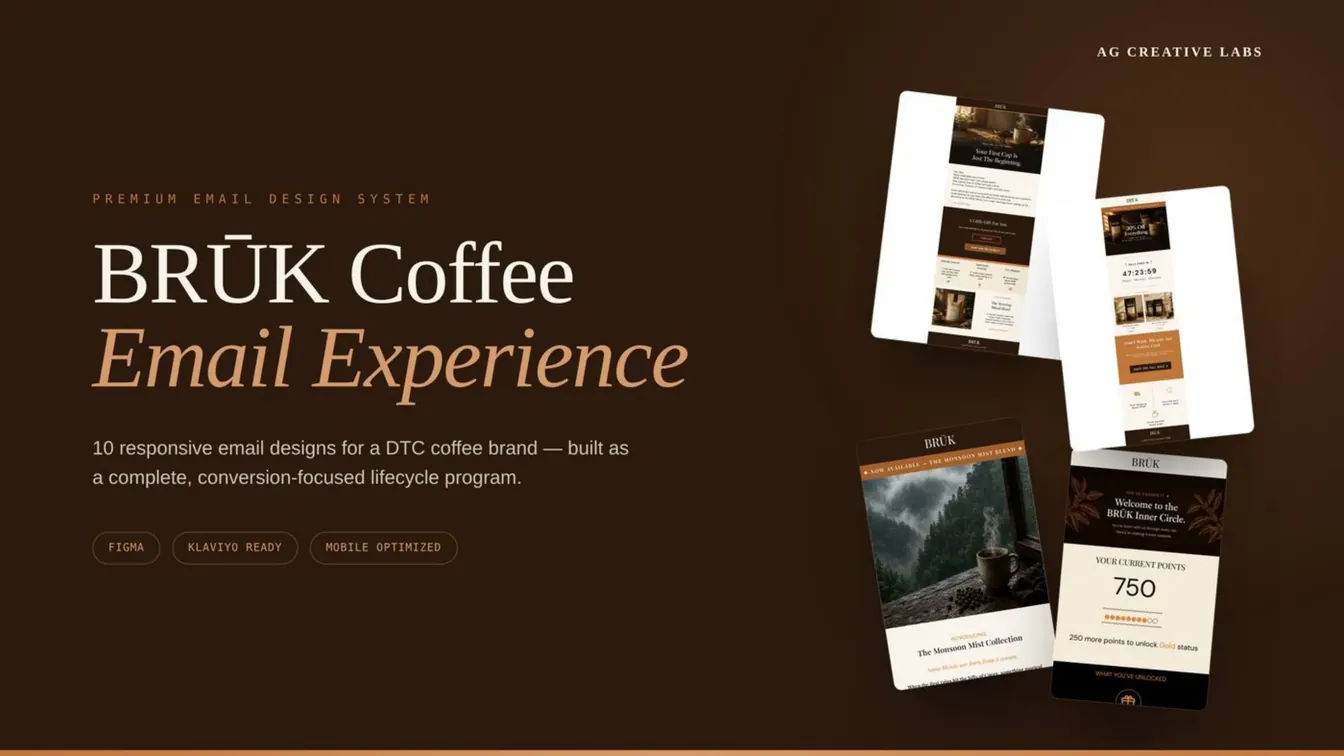
Premium Email Design System
Ten responsive designs and the Klaviyo build behind them — flow architecture, the abandoned cart breakdown, and the goal set for every email in the program.
Open case study →NUTRIPAWS
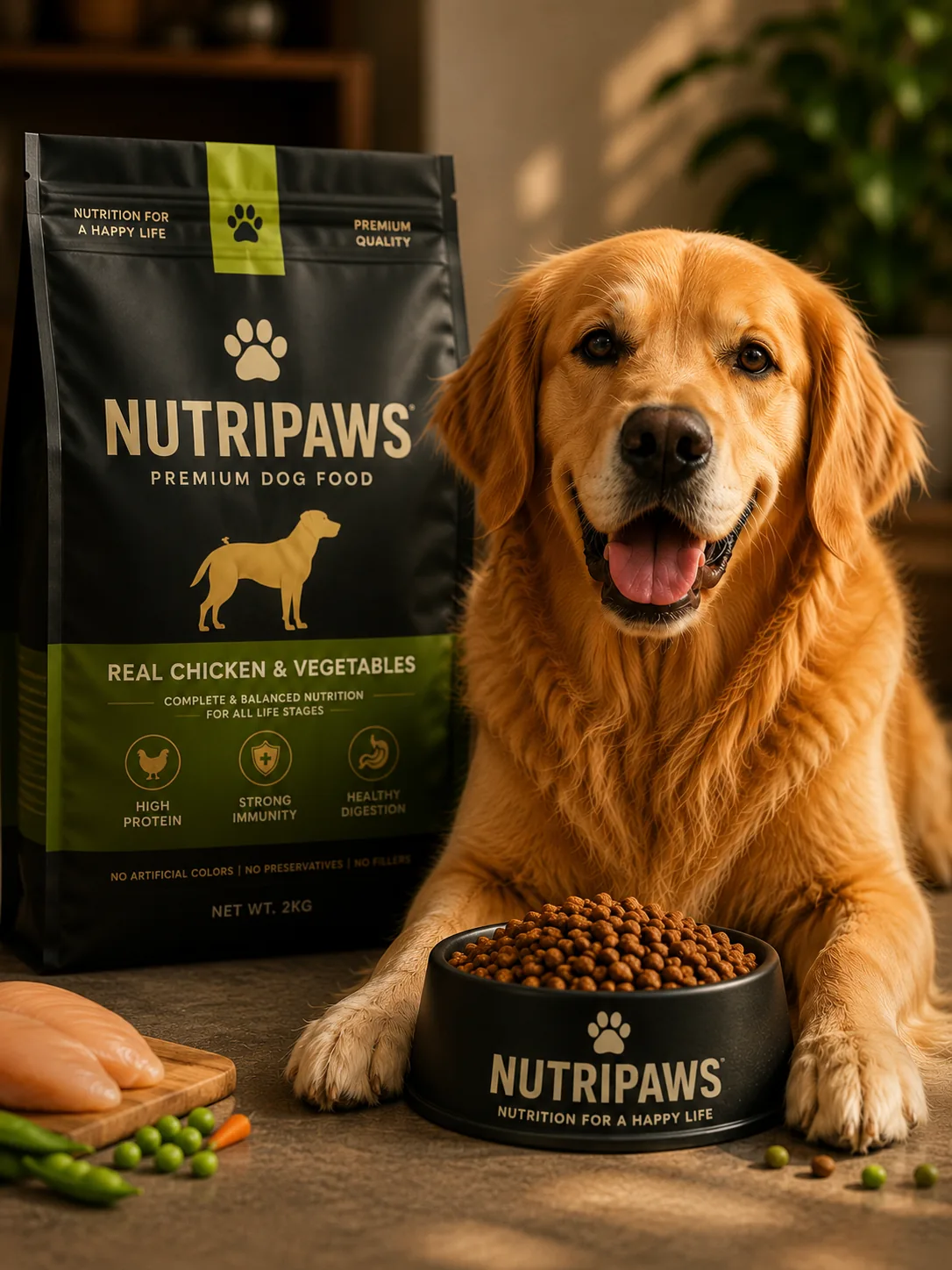
Pet nutrition · Video onlyPet food, approached purely as a paid-social creative problem. No email system here — this one exists to show the video work standing on its own.
- The problem
- Pet nutrition is bought by someone who'll never eat it, for someone who can't say whether it's good. Ingredient claims don't close that gap — every competitor makes the same ones.
- The approach
- Lead with the animal, not the label. The decision is emotional first, rational second: the owner needs to see an eager, healthy dog before a nutrition claim registers as anything more than packaging copy.